English| EUR
Suggested for you
More currencies
Choose a language
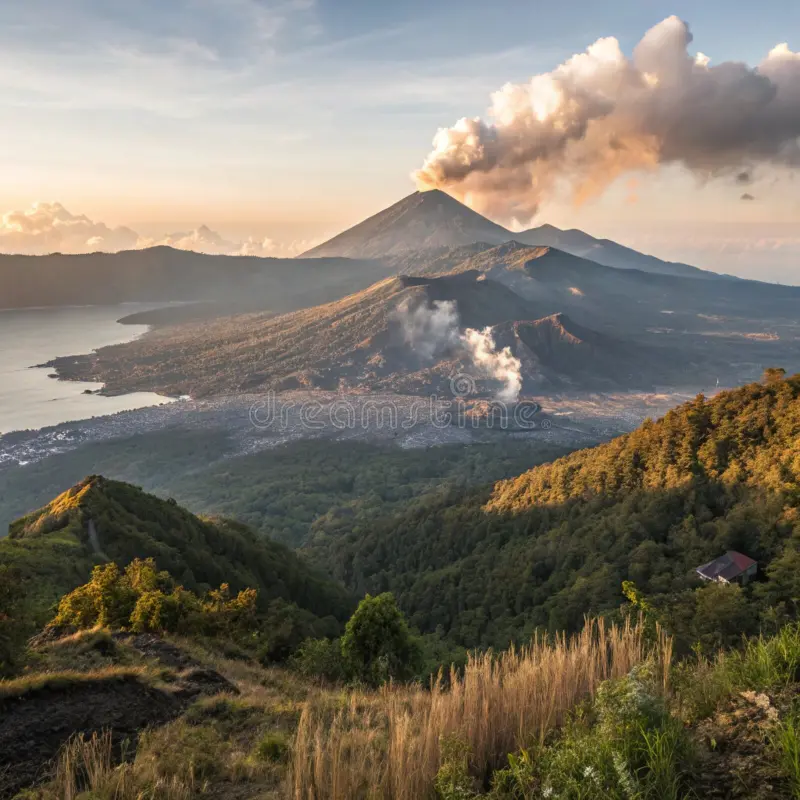
Every night, a line of headlamps threads up a 1,717-metre active volcano in Kintamani, and almost everyone in it asked the same question before booking. This is it safe to climb mount batur guide sets out the real risk picture: the permit system, the guide requirement, the volcanic monitoring behind it all. No scare stories, no reassurance you have not earned.
Quick answer
Yes — for most reasonably fit adults, the Mount Batur sunrise trek is safe when done with a licensed local guide under the 100,000 IDR trekking permit, which is required per person. The trail is open around the clock, 00:00–23:59 daily, but conditions govern access: the volcano remains active and monitored, and guides turn groups back when visibility, rockfall or gas readings warrant it.
Mount Batur is not a dormant landmark. It sits inside a caldera roughly 13 kilometres across, formed by eruptions tens of thousands of years ago, and Indonesia's volcanology agency has kept it under continuous instrumental watch for decades. The cone people climb before dawn is the young one — built by lava flows that reached the shore of Lake Batur within living memory. Asking is it safe to climb mount batur is therefore a question about a working volcano, not a hillside, and the honest answer is that safety here is managed rather than guaranteed. That management has a visible shape. Access to the summit trail runs through the local guide association in Kintamani, and the 100,000 IDR trekking permit is issued per person. A guide is not decoration: they read the loose scoria underfoot, know which of the branching paths above the tree line has degraded since the last rains, and hold the authority to stop a group. Volcanic hazard here is monitored by alert level, and when that level shifts, summit access closes. This is the mechanism most visitors never see, and it is the main reason the Batur sunrise trek has a stronger record than its raw statistics — an active volcano, thousands of pre-dawn walkers each month — would suggest. The honest caveats sit elsewhere. Almost every incident on this mountain traces back to the same short list: people who underestimated the grade, people who went unaccompanied, people who wore the wrong shoes. None of those are properties of the volcano. They are decisions made in a hotel room the previous afternoon. So the practical answer to is it safe to climb mount batur is conditional in a useful way. Book through the permit system rather than around it. Treat the guide's call as final, including the call to turn back. Read the mountain's current alert status close to your date, since it changes independently of the weather and independently of your plans. The trailhead sits at Mount Batur, Kintamani, Bangli Regency, and the recommended arrival window is 02:00–03:30. Everything else — pace, kit, whether the summit suits your knees — the dedicated sections of this Bali volcano trekking guide cover in detail.
“Safety on an active volcano is managed rather than guaranteed — and the mechanism that manages it is the guide who can say no.”
The safest practical window is the dry season, especially April or October, with a pre-dawn start around 02:00–03:30. Cooler air and a better chance of clear visibility usually make the climb more manageable before sunrise.
Cooler, drier nights; clearer dawns
This is the most reliable stretch for footing and visibility. Rain is less likely, so exposed sections are less slippery and the sunrise view is less often blocked by cloud or mist.
—
Starting early on a weekday reduces crowd pressure and helps you move at a steadier pace. The dark-to-dawn transition is also when temperatures are more comfortable for hiking.
Warmer, humid, frequent showers
This period can still be climbable, but wet rock and sudden showers raise the chance of slick footing and reduced visibility. If you go then, expect less predictable conditions.
Coolest part of night
This is the best arrival window for a safer-feeling ascent because temperatures are lower and you reach the viewpoint before daylight traffic builds. Visibility usually improves fast after first light.
Verdict: For the best balance of safety and visibility, choose April or October, start between 02:00 and 03:30, and prefer a weekday pre-dawn climb.
Most incidents on Mount Batur come down to preventable errors rather than the mountain itself: poor footing, thin clothing, and a late start. Here are the failures that turn a manageable climb into an uncomfortable or risky one, and what to do instead.
Wearing sandals, flip-flops or smooth-soled sneakers
The upper trail is loose scree and volcanic gravel that slides underfoot. Wear closed trekking shoes or trainers with deep, grippy tread, and treat the descent as the harder half — most slips happen coming down in daylight.
Underestimating loose volcanic ground on the steep sections
Shorten your stride, plant your heels on the descent, and keep both hands free rather than carrying loose items. Stay on the established path instead of cutting switchbacks, which dislodges rock onto people below.
Packing only shorts and a t-shirt for the summit
The summit is exposed and noticeably colder than the trailhead, especially while waiting for first light. Bring a windproof layer and something warm for the sit-down at the top.
Relying on a phone screen for trail light
A phone leaves one hand occupied and dies in the cold. Carry a headtorch with fresh batteries so both hands stay free on the loose sections.
Arriving too late to reach the summit before sunrise
Aim to be at the trailhead within the 02:00–03:30 arrival window. Later starts mean rushing the steep upper trail in the dark or missing first light entirely.
Setting off alone in pre-dawn darkness
The route braids into false paths that are hard to read by torchlight. Go with a guide or a group who knows the line, and never split off to find your own way down.
Mount Batur is an active volcano worked by a local guiding association, so conduct on the trail is regulated as much by community agreement as by safety. Following your registered guide and moving as a group keeps the ascent orderly for everyone on the path.
Mount Batur is generally manageable for fit hikers with good balance and no major knee, heart, or respiratory limitations, but it is not a low-effort or barrier-free trail. If you have mobility, balance, or stamina concerns, treat the climb as physically demanding and assess it with a clinician or experienced guide before going.
The hike is not suitable for wheelchairs because it is a mountain trail rather than a paved route.
There is no verified step-free route on the climb.
No verified accessible toilet facilities are listed for the trail.
No verified hearing or visual aid support is listed for the hike.
Ask your operator or guide about timing if you need a lower-stress pace, but do not expect formal quiet-time infrastructure.
Most of what keeps a Batur climb safe is settled before you leave your accommodation, so work through this list in order.
Everything you need to know about is it safe to climb mount batur
For many beginners, is it safe to climb mount batur depends on pacing, footwear, and how comfortable you are with a pre-dawn uphill walk. The route is a volcano trek with loose sections, so treat it as a moderate hike rather than a casual stroll.
At sunrise, is it safe to climb mount batur if you start early and move with a local guide or organized group. The dark approach is the part people underestimate, so a headlamp and steady footing matter more than speed.
If you are wondering whether is it safe to climb mount batur without a guide, the practical answer is that guided starts are the normal and safer setup for most visitors. Guides help with route finding, timing, and local trail etiquette on this Kintamani volcano hike.
The Mount Batur entrance fee is 100,000 IDR per person for the trekking permit. This is the figure to use when planning the hike, and it is separate from any transport or guide arrangements.
For timing, the best arrival window is 02:00–03:30, which gives you the best chance of sunrise and cooler temperatures. Arriving in that window also leaves enough time for check-in, briefing, and the climb itself.
Families often ask if is it safe to climb mount batur with kids, and it is only a good idea if the child is fit, sure-footed, and comfortable hiking before dawn. The trail is manageable for some families, but the early start and rocky sections make supervision essential.
The most common mistake is underestimating the pre-dawn darkness and the uneven volcanic path. People often rush the ascent, wear weak shoes, or skip a light layer, which makes the climb feel harder than it needs to be.
Mount Batur is open every day of the week, so the hike can be planned for any weekday or weekend. The mountain’s listed opening hours are 00:00–23:59 daily, but sunrise timing is what shapes most visits.
Hot Springs Near Mount Batur Guide
Read more GuideHow Long Does It Take to Climb Mount Batur?
Read more Tickets & toursMount Batur Hiking Tours from Ubud
Read more GuideWhat to Wear for the Mount Batur Hike
Read more Tickets & toursMount Batur Hot Spring Tours
Read more Tickets & toursMount Batur Jeep Tour & Hot Springs
Read more Tickets & toursToya Bungkah Hot Spring Tours
Read more